One of the most common questions we’re asked when considering timber frame construction for the first time is: how does the programme actually work?
Modern Methods of Construction are often discussed in broad terms, but the real value of timber frame becomes clear when you look at the delivery timeline. Compared with masonry construction, timber frame significantly reduces programme duration and increases predictability across the build.
Understanding where those efficiencies occur is key.
The Masonry Timeline
In a masonry build, the structure is erected sequentially on site. Each stage relies heavily on-site labour and favourable weather conditions.
A typical masonry programme for a standard house type can often look like this:
- Foundations and substructure
- Blockwork inner leaf construction
- Scaffold adjustments
- Floor joists installation
- Further blockwork to wall plate level
- Roof trusses installed
- Roof coverings applied
- External envelope completed
Each step requires separate trades and coordination. Progress is dependent on site productivity and weather conditions. As a result, the time required to reach a weather-tight structure can typically extend to 20–30 weeks, depending on the build type and site conditions.
The Timber Frame Approach
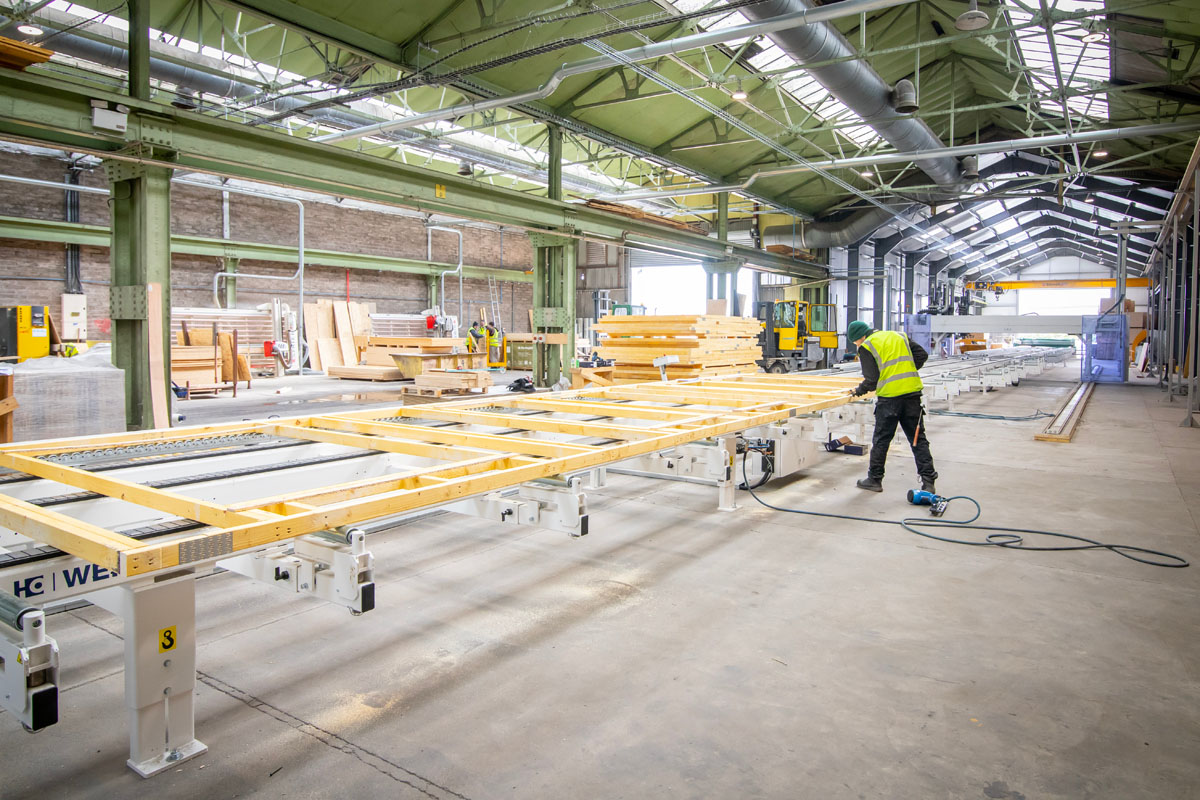
Timber frame construction changes this sequence by shifting much of the structural work offsite into a controlled manufacturing environment.
Wall panels, floor systems and roof components are precision engineered in factory conditions before arriving on site. This significantly reduces the amount of work required on site and allows the structural shell to be erected far more quickly.
A typical timber frame programme includes:
- Foundations and substructure
- Delivery of factory-manufactured wall panels
- Installation of the structural frame
- Installation of floor cassettes or joists
- Roof structure installation
- External envelope completion
Because the structural components arrive pre-manufactured, installation can progress rapidly. The structure of a typical house can be erected within a matter of days rather than weeks, with the building reaching weather-tight status significantly earlier in the programme.
For many standard house types, timber frame can reduce the time to weather-tight stage by six to ten weeks compared with masonry construction.
Why Programme Certainty Matters
Reducing programme duration has a direct commercial impact.
Earlier weather-tight completion allows internal trades to start sooner. This improves site sequencing, reduces programme risk and allows developers to bring homes to market faster.
Earlier completion can also support:
- Faster sales launches
- Improved cashflow across the development
- Reduced site preliminaries
- Better coordination of follow-on trades
Programme certainty is particularly important on larger housing developments, where delays to early plots can impact the entire delivery schedule.
However, timber frame programmes rely on early planning and coordination.
Because structural components are manufactured offsite, designs must be finalised earlier in the process than with traditional construction. Developers who engage with timber frame manufacturers during the design stage are able to optimise structural layouts, coordinate sequencing and ensure the manufacturing schedule aligns with site progress.
When this approach is taken, the benefits of timber frame construction become fully realised.
A Different Way to Build
Timber frame construction does not simply replicate traditional construction faster. It changes the way projects are planned, coordinated and delivered.
For developers seeking programme certainty, improved quality control and faster housing delivery, that difference is significant.
To speak to our team about your next project, email info@deesidetimberframe.com or call 01569 767 123.