Spend enough time on live housing sites and you begin to notice patterns.
Not the ones set out in project programmes or discussed in pre-start meetings, but the ones that actually influence how a build progresses day to day. These are the realities that affect delivery, cost, and timelines and are well understood by those working on site, but they are not always spoken about openly.
Over the years, I’ve worked alongside developers across a wide range of projects, and while no two sites are identical, the same challenges tend to surface time and again.
One of the most common issues is that the programme rarely reflects the reality of the build. On paper, everything looks aligned. Trades are scheduled, materials are planned, and timelines are clearly defined. However, once work begins, small disruptions start to appear. A delay in one area quickly affects another, and what begins as a minor issue can have a wider impact on the overall programme.
Closely linked to this is the coordination of trades. Construction relies on sequencing, and when that sequencing is disrupted, it creates inefficiencies across the site. Trades are either waiting to start or are brought in under pressure to catch up. Neither scenario is ideal – they affect productivity, increases the likelihood of rework, and ultimately places strain on the programme.
In recent years, this has been made more challenging by labour availability. Skilled trades are harder to secure, particularly in certain regions, and this has changed how sites operate.
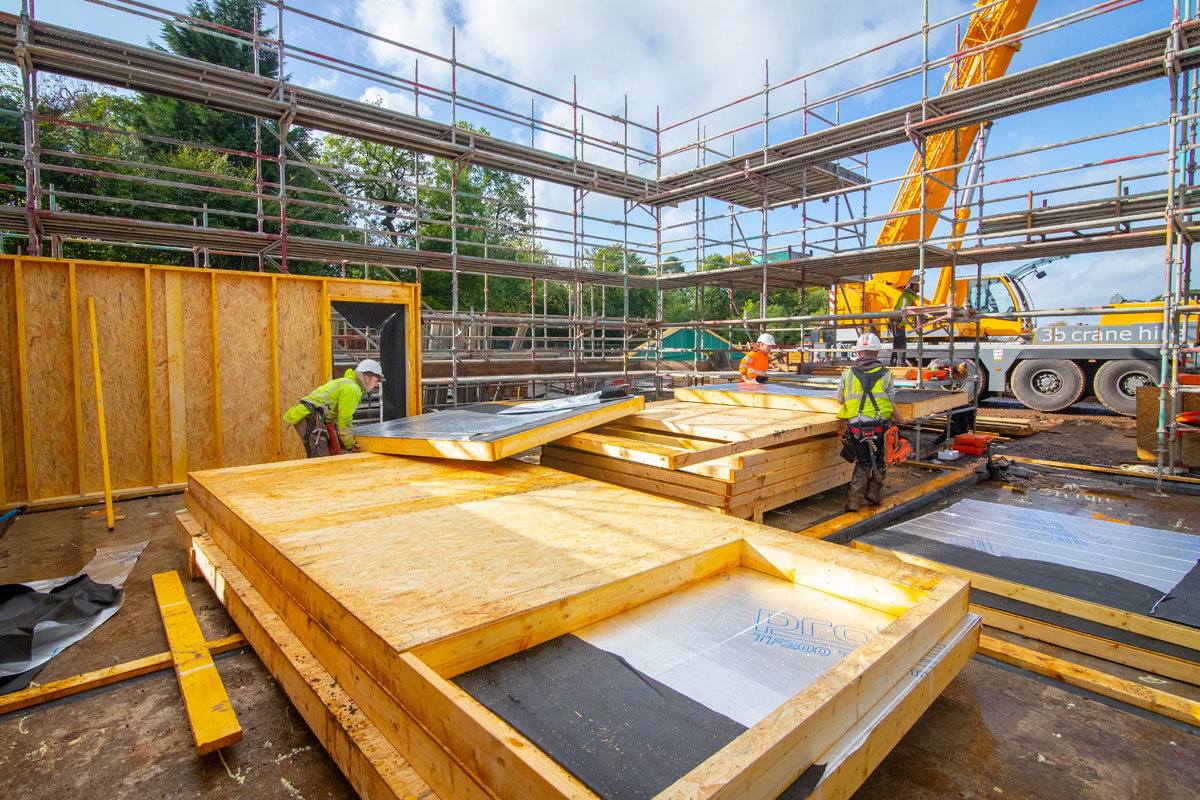
A challenge that is primarily unique to developers that have just moved from brick and block to timber frame is that they’re not always prepared for the pace of build. Timber frame erection happens quickly. A structure can be in place within a matter of days, but if the groundwork, scaffolding, or follow-on trades are not ready, that speed is lost. Instead of improving efficiency, it creates pressure elsewhere on the site.
Many developers and site teams are highly experienced in brick and block construction, where the pace of build allows more time for adjustments. Timber frame requires a different approach – one that places greater emphasis on planning, sequencing, and ensuring that everything is ready in advance.
From our perspective, the most important factor in a successful timber frame project is not the product itself. It is how well the project is prepared before installation begins.
When we work with developers, a large part of our role is to support that preparation. That means getting involved early, reviewing programmes, discussing sequencing, and identifying potential issues before they arise on site. It also means being clear about what needs to be in place, whether that is scaffolding, access, or follow-on trades.
The difference between a smooth project and a difficult one often comes down to these early decisions. When the site is properly prepared, timber frame delivers exactly what it is designed to do. It reduces build time, improves consistency, and allows developers to move through key stages of the programme with greater confidence.
When that preparation is not in place, the challenges we see on traditional builds do not disappear. In many cases, they become more visible.
The reality is that most of the issues on site are not caused by the method of build but instead relate to coordination, planning, and the way projects are set up from the beginning.
Timber frame supports that approach. It introduces more control into the process, reduces reliance on variable site conditions, and creates a clearer path from design through to completion.
For many of the developers we work with, that shift is what makes the difference. It allows them to manage risk more effectively, maintain programme certainty, and deliver projects in a way that is both efficient and predictable.
Most developers may not talk about these truths – but we do. And we’re working to raise awareness of them so that the developers we work with can reap the benefits of building with timber frame.
To speak to our team about your next project, email info@deesidetimberframe.com or call 01569 767 123.