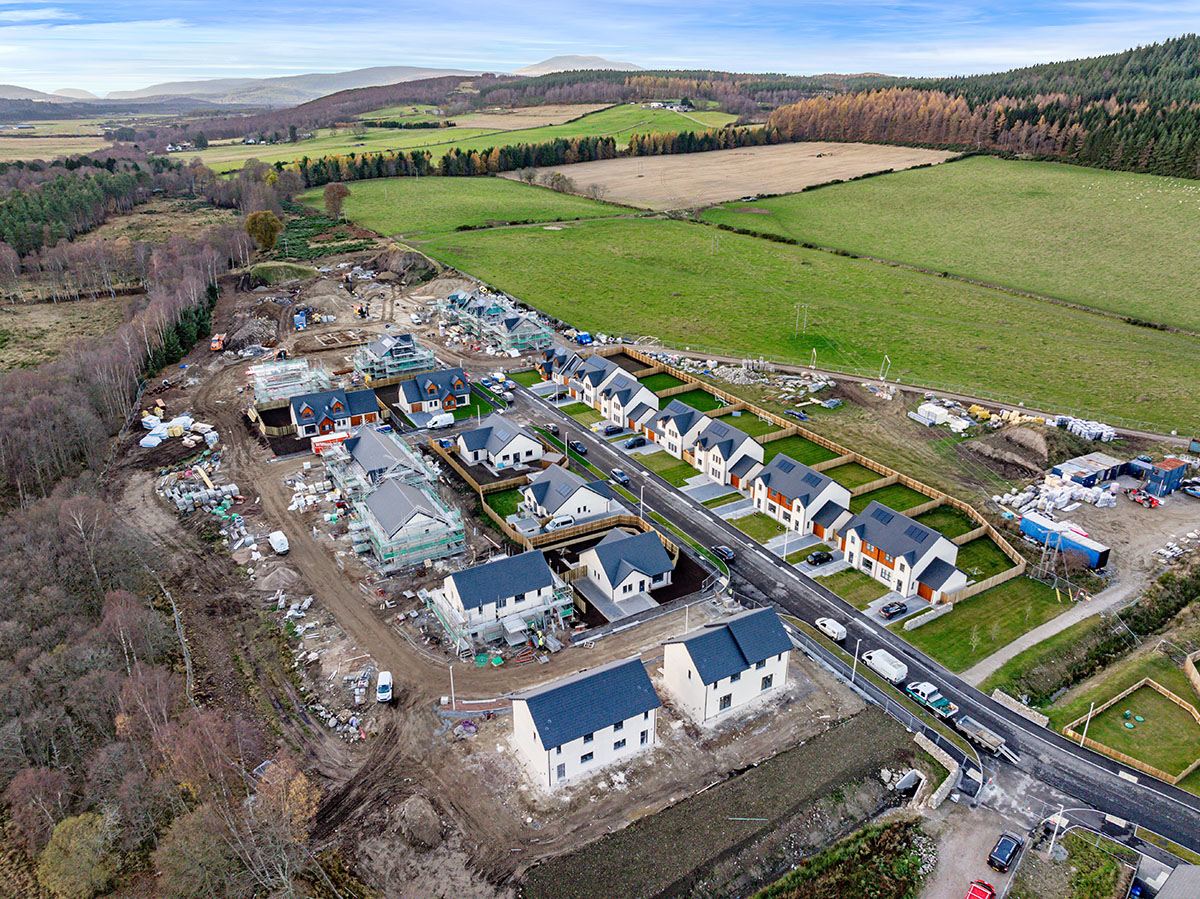
Some of the most important decisions affecting a timber frame development are made long before manufacture begins.
House type design, structural requirements, procurement, site programme, logistics and erection sequencing are closely connected. When timber frame expertise is brought into those conversations early, there is greater opportunity to coordinate them around the chosen construction method, identify potential issues before they reach site and create greater certainty around delivery.
For developers and contractors planning residential projects in England, early engagement with the timber frame manufacturer should therefore be viewed as part of the pre-construction process, rather than simply the procurement of a structural package.
Design decisions have consequences further down the programme
Timber frame is a precision-engineered system. The earlier the manufacturer can review the proposed house types and understand the wider development, the greater the opportunity to ensure those designs work efficiently from an engineering, manufacturing and erection perspective.
This does not mean compromising architectural intent or redesigning a development around the timber frame manufacturer. It means bringing specialist knowledge into the design process while there is still scope to use it.
Structural requirements can be considered alongside architectural design, repeated details can be rationalised where appropriate and potential complexities can be identified before they become embedded within multiple house types.
Richard Ruse, Business Development Manager at Deeside Timberframe, sees the timing of these conversations as particularly important.
“There is a significant difference between being involved while a project is still developing and receiving a completed design with every decision already fixed. Early engagement gives us the opportunity to understand what the client is trying to achieve and contribute our manufacturing and erection experience before those decisions become difficult or expensive to change.”
For multi-plot residential developments, relatively small improvements made at this stage can also be replicated across multiple homes. That makes early design coordination particularly valuable when standard house types are being delivered repeatedly across a development.
Design, manufacture and site programme need to work together
One of the advantages of offsite construction is the ability to manufacture structural components away from site within a controlled factory environment. To realise the full programme benefit, however, manufacturing and site activity need to be carefully coordinated.
Groundworks, manufacturing slots, delivery schedules and erection programmes cannot be considered independently.
Early engagement gives the timber frame manufacturer visibility of the anticipated development programme and allows production requirements to be considered alongside progress on site. It also gives the wider project team a clearer understanding of the information, approvals and site readiness required before manufacture and erection can proceed.
This becomes increasingly important on larger developments where multiple plots or phases need to move through production and erection in a defined sequence.
Site readiness should be considered before the frame is manufactured
Offsite manufacture transfers a significant amount of construction activity into a controlled factory environment, but successful timber frame delivery still depends on preparation on site.
Foundation tolerances, access, crane requirements, delivery routes, storage constraints and the sequence in which plots become available can all influence erection.
These considerations are much easier to address during pre-construction than when frames are already moving through production.
As Richard explains:
“A successful timber frame programme depends on much more than what happens in the factory. We need to understand how the site will operate, when plots will be ready, how frames will arrive and how erection fits around the wider programme. The earlier those conversations happen, the more opportunity everyone has to plan properly rather than react later.”
This is an important part of de-risking offsite delivery. Precision manufacturing needs to be supported by equally considered preparation on site.
Early engagement can create greater commercial certainty too
The benefits are not limited to design and programme.
Bringing timber frame expertise into a development earlier can provide greater clarity around the scope of the structural package, identify potential design efficiencies and reduce the likelihood of changes emerging later in the process.
That matters commercially because changes become increasingly disruptive once designs have been coordinated, materials procured, manufacturing scheduled or work started on site.
Early engagement does not remove every variable from a residential development. No construction methodology can do that. It does, however, create an opportunity to identify and manage more of those variables before they begin affecting programme and cost.
For contractors and developers, that is where specialist supply-chain involvement can add value well beyond the price of the individual package.
A timber frame partner, not simply a supplier
Ultimately, the greatest value from offsite timber frame is achieved when the manufacturer is treated as part of the delivery team.
The manufacturer brings specialist knowledge of engineering, design for manufacture, production, logistics and erection. Bringing that expertise into a project during pre-construction allows it to inform decisions while there is still an opportunity to improve the outcome.
Richard believes this should be central to how developers approach timber frame procurement:
“Our role should not begin when somebody is ready to place an order for timber frame. The best conversations start earlier, when we can sit alongside the project team, understand the programme and help determine the most effective route through design, manufacture and erection. That is when you get the greatest value from having a specialist timber frame partner involved.”
For housing developers and contractors looking for greater certainty around design, programme and delivery, the principle is straightforward: the earlier timber frame expertise is brought into the process, the greater the opportunity to de-risk what happens later.
For more information on how Deeside Timberframe can support your next housing development, contact info@deesidetimberframe.com or call 01569 767 123.