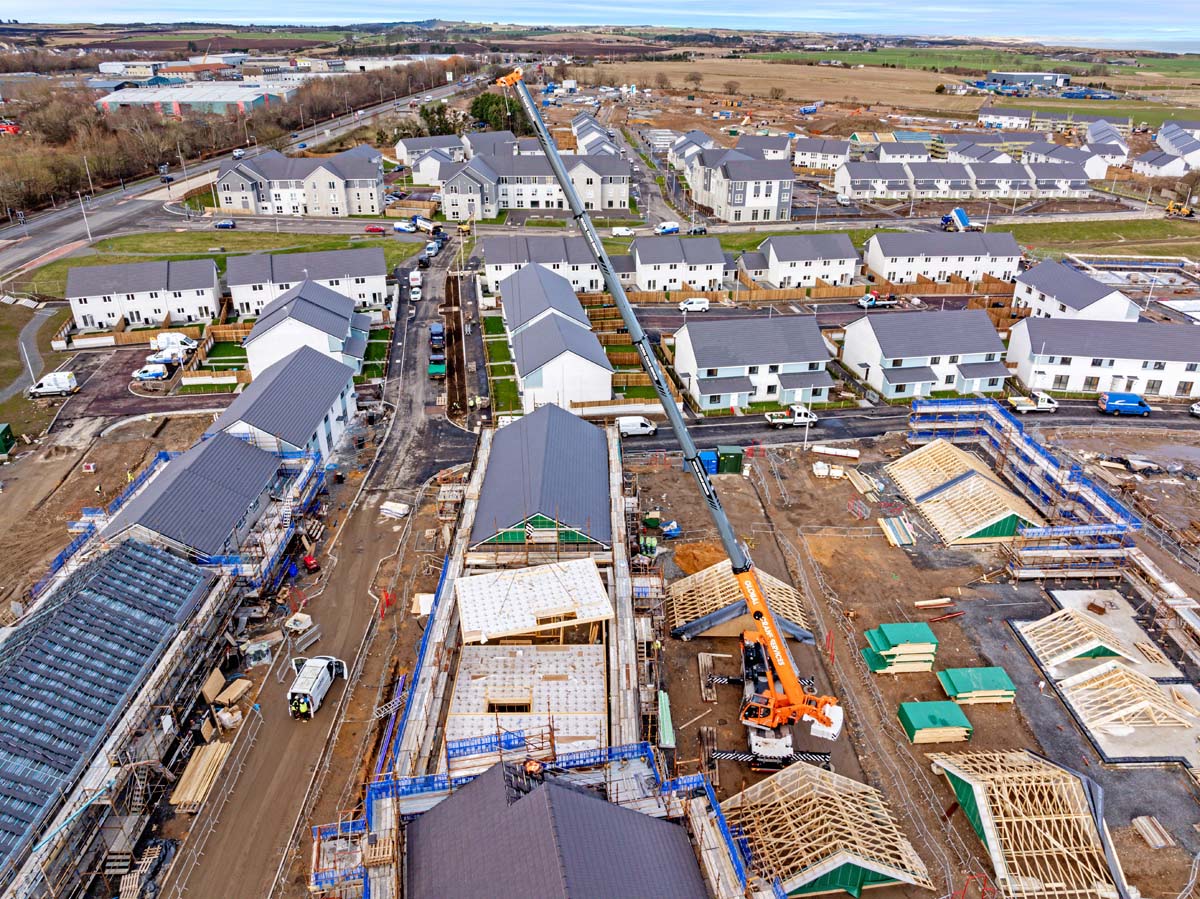
The publication of the new “Timber Frame: Where to Start” guide by Timber Development UK (TDUK) and the Structural Timber Association (STA) marks an important step forward for the UK construction industry; providing confidence and clarity for developers, contractors and specifiers considering timber frame for the first time.
Designed to demystify the process of building with timber, the guide brings together expert insight from across the sector, offering practical guidance on everything from early-stage design considerations to procurement and delivery. For an industry under increasing pressure to build faster, more efficiently and more sustainably, it represents a timely and necessary intervention.
For Deeside Timberframe, one of the UK’s leading offsite timber frame manufacturers, the guide provides a shift in perception: moving timber frame from an alternative option to a mainstream solution.
“This is exactly what the industry needs,” said David Crawford, Managing Director of Deeside Timberframe. “For too long, timber frame has been seen as something different or unfamiliar, particularly in England. This guide helps to remove that uncertainty. It gives developers and contractors the confidence to take that first step, backed by trusted industry bodies.”
Timber frame construction is already well established in Scotland, where the vast majority of new homes are delivered using offsite timber systems. The result is a mature supply chain, strong industry understanding, and proven delivery at scale.
In contrast, adoption in England has been slower, which is often due to a lack of familiarity rather than capability.
“Scotland has shown what’s possible when timber frame becomes the standard approach,” David continued. “We’re delivering homes quickly, efficiently and to a high level of performance. The opportunity now is to replicate that success in England, and this guide removes one of the biggest barriers to doing that.”
At a time when the UK Government is targeting the delivery of 1.5 million new homes, the need for scalable, reliable construction methods has never been greater. Timber frame, as a leading form of Modern Methods of Construction (MMC), offers a clear pathway to achieving that by combining speed of build, quality assurance and reduced carbon impact. The new guide helps to enable the transition, particularly for developers and housing providers who may be new to timber frame. By outlining a clear starting point, it reduces perceived risk and supports better-informed decision-making at the earliest stages of a project.
For Deeside Timberframe, the release of the guide aligns closely with its own recent investments in manufacturing capacity and capability. Following a multimillion-pound expansion of its Throsk facility, the company is already operating at scale and supporting projects across both Scotland and England.
“The guide explains how to start, but the industry also needs partners who can deliver,” said David. “We’ve made significant investments in automation, design and in-house manufacturing so that we’re ready to meet increased demand. Whether it’s private housing or large-scale affordable developments, we have the capacity and the expertise to support clients from day one through to completion.”
Beyond delivery, David also highlights the importance of early engagement – a key theme reflected in both the guide and Deeside Timberframe’s own approach.
“The earlier timber frame is considered, the greater the benefits. Through Design for Manufacture and Assembly (DfMA), we can help optimise layouts, reduce prelim costs, and improve programme certainty. That’s where real value is unlocked – not just in build speed, but in overall project viability.”
As the construction sector continues to evolve in response to housing demand, labour shortages and Net Zero targets, the publication of the “Where to Start” guide represents a clear signal of intent from industry bodies.
To speak to our team about your next project, email info@deesidetimberframe.com or call 01569 767 123.